
Older woman smiling and man with a serious expression standing indoors
Bible, Gentiles, Israel, Kindness, Production, Pruning, Romans, Salvation, Scripture

KINDNESS AND SEVERITY

ROMANS 11:22

“See then the kindness and severity of God: to those who fell, severity, but to you, God’s kindness, if you continue in His kindness; for otherwise you too will be cut off.”

When I hear the word “kindness,” certain people’s faces come to mind. Some people just have that gift or should I say choose to exercise it well. And when I think of the word “severity,” other faces pop up. Those I don’t like so much. They are not much fun to be around.

Paul is still in the midst of describing the relationship of unbelieving Jews as compared to the believing Gentiles. One was pruned away to make room for the other. The words Paul uses in today’s verse, “kindness” and “severity” further paint the picture for us. Let’s look at what Paul was referring to by using these two words.

APPLICATION

First, Paul uses the Greek word xrēstótēs which HELPS Word-studies describes this way, “(useful kindness) refers to meeting real needs, in God’s way, in His timing (fashion).” It is listed in Galatians 5:22 as a fruit of the Spirit. So, we know this must come from God, right? Paul uses it three times in this verse alone. He must have wanted to drive a point home. Keep in mind that the idea of a kind god was foreign to Gentiles. Even most of the Jews tended to believe more in a harsh God rather than a kind one.

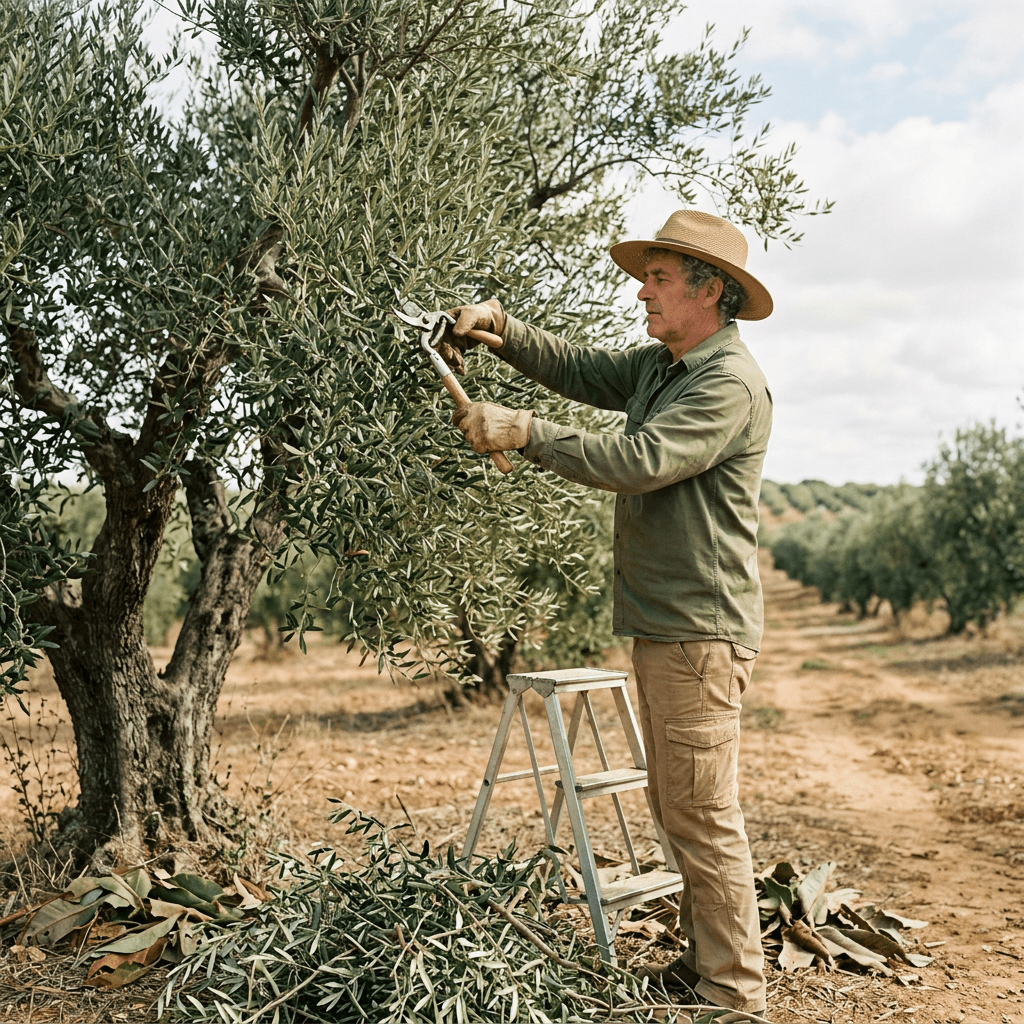
But how about that other word, “severity”? Surely, that isn’t from God. Actually, the Greek word isn’t as severe as it sounds. I need to share Barnes’ description of this word. “The word ‘severity’ now suggests sometimes the idea of harshness, or even of cruelty. (Webster.) But nothing of this kind is conveyed in the original word here. It properly denotes ‘cutting off,’ apotomian from apotemnō, to cut off; and is commonly applied to the act of the gardener or vine-dresser in trimming trees or vines, and cutting off the decayed or useless branches. Here it refers to the act of God in cutting off or rejecting the Jews as useless branches; and conveys no idea of injustice, cruelty, or harshness.”

If you just looked at the process of pruning, it does look severe. It looks like you’re cutting off all the good stuff. But this act gives room for new growth. In this instance, it was for the engrafting of the Gentiles into the root plant. Paul is making sure the Gentiles know their place and how they got there. He also wants them to know it is just as important to stay in that relationship. The same applies to us, brothers and sisters. Enjoy the kindness of God, but do not confuse kindness with meekness. God will hold us all accountable for our actions should we choose to ignore Him.

Father, thank You for Your kindness toward me and for the pruning You do to make me more productive.

If the Lord should lead you to support our ministry, check out our ministry page at Trans World Radio (www.twr.org/carl-willis). 

Standard
Man trimming branches of olive tree with pruning shears in orchard
Bible, Gentiles, Israel, Pruning, Purpose, Romans, Scripture

MISUNDERSTANDINGS

ROMANS 11:19

“You will say then, ‘Branches were broken off so that I might be grafted in.’”

Isn’t it amazing that one event can be interpreted so differently by people? They each see it from their own perspective and make their own assumptions. If you came upon a car crash, you might assume certain things about the drivers. Was one under the influence? Was one on their phone? Unless you know all the facts, your opinion of any incident is just that – your opinion. Misunderstandings happen due to lack of knowledge.

Paul brings up a misunderstanding that may have existed among the Gentile believers. We’ll see this discussed over the next few verses. As I mentioned yesterday, some Gentiles were claiming superiority over the Jews since God had given them this message of salvation after His rejection of the Jews who had refused His Son. Remember, these Gentiles didn’t have the knowledge of the Scriptures that showed God’s plan was to use the Jewish nation to reach the world. They were only seeing the current situation. Context is always important.

APPLICATION

The Topical Lexicon says, “Paul addresses Gentile believers tempted to view Jewish unbelief as proof that God had shifted His favor permanently. To correct this arrogance, he recalls that unfaithful Israelite branches ‘were broken off’ (Romans 11:17, 19, 20) so that Gentiles might be grafted in by faith. The verb occurs only in this paragraph, underscoring the deliberate and solemn nature of the divine action.” The practice of breaking off unproductive branches of an olive tree to make room for more productive ones was one the people could understand. They may have even done this to their own olive trees. The tree was still there along with the other branches.

The breaking off of these branches Paul is referring to has a specific purpose. You really need to see this. Pruning or breaking off these branches had a missionary purpose. Remember back in Romans 11:11 Paul said it was to make Israel jealous and desire to return to the Lord. That is still true today. Israel still has a role to play in our eschatological future.

Let me ask you something about your spiritual life. Do you have unproductive branches that are sucking life from you? We engage in so many things that really have no spiritual purpose. Those can literally cause your more productive branches to wither. You may need to prune back your rec time for more prayer time. You might need to give up something else to spend more time in the Word. Prune your own life to make room for more production spiritually.

Father, give me wisdom to know what to prune in order to produce more for You.

If the Lord should lead you to support our ministry, check out our ministry page at Trans World Radio (www.twr.org/carl-willis). 
Standard
Woman mentoring a man with notebook in office corridor
Arrogance, Bible, Covenant, Gentiles, Israel, Romans, Scripture

ARROGANCE

ROMANS 11:18

“do not be arrogant toward the branches; but if you are arrogant, remember that it is not you who supports the root, but the root supports you.”

When my wife first met me back in 1985, she thought I was arrogant. Can you believe that? Me? Arrogant? I have to admit that I could come across that way. I was pretty self-confident, but I never saw myself as arrogant. That’s the problem with arrogance. You never really see yourself that way, but others can sure see it. Obviously, my wife learned that I wasn’t arrogant. She agreed to marry me after our third date! We celebrated 40 years of marital bliss last December.

Paul issues a warning to the Gentiles in verse 18 of Romans 11. Obviously, there were some Gentiles who thought themselves better than the Jews since God had now offered them this covenant relationship. They were the “replacements.” Not so quick. Paul reminds them that they are just the branches which God has engrafted (see yesterday’s blog) into the root. What did Paul mean by the use of the word “arrogant”?

APPLICATION

Katakauchaomai is the Greek word translated as “arrogant.” It is only used four times in the New Testament, two of those times in this verse. It means to “boast down, over-exalting one thing at the expense of another which results in wrong conclusions – i.e. that unjustifiably downgrade by boasting with a sense of false superiority.” (HELPS Word-studies) Think of someone who looks down their nose at you. They are puffed up.

The word is used twice in James. In James 2:13 we read, “For judgment will be merciless to one who has shown no mercy; mercy triumphs over judgment.” Wait a minute, Carl. I thought you said this word didn’t mean anything good. Let me explain. The literal translation of katakauchaomai means “to boast against.” Someone once said, “It’s not arrogance if you can do what you say.” Mercy is above judgment. God has proven this fact in our lives. He is able to show this.

The last time katakauchaomai is used is in James 3:14. “But if you have bitter jealousy and selfish ambition in your heart, do not be arrogant and so lie against the truth.” We can see here the danger of arrogance as it links arms with jealousy and selfishness and lying. Not good company. So, arrogance has no place in a believer’s life. Christ taught us to be humble and then He will exalt us. Practice that today.

Lord, help me shed any pretense of arrogance in my life and show humility instead.

If the Lord should lead you to support our ministry, check out our ministry page at Trans World Radio (www.twr.org/carl-willis). 

Standard
Wooden sign with the word MOTIVATION on a forest hiking trail.
Bible, Covenant, Gentiles, Israel, Jealousy, Romans, Salvation, Scripture

MOVED TO JEALOUSY

ROMANS 11:14

“if somehow I may move my own people to jealousy and save some of them.”

I had the privilege to supervise a lot of people through my ministry career. Some were easier than others, lol. But I always tried to motivate my people to do their best. One way was to never ask them to do something I wasn’t willing to do myself. I would get right there in with them. Motivation is a learned skill, I believe. You have to know what motivates a person. For some, it’s money. Others need words of encouragement. Find what motivates those around you and practice it.

Paul was doing just that. He was trying to motivate the Jews who had rejected Jesus to turn to him by showing them from Scripture the warnings. Here is how Albert Barnes explains Paul statement “I may move my own people to jealousy.” “I may awaken up to zeal, or to an earnest desire to obtain the like blessings. This was in accordance with the prediction of Moses, that the calling in of the Gentiles would excite their attention, and provoke them to deep feeling. The apostle expected to do this by calling their attention to the ancient prophecies; by alarming their fears about their own danger; and by showing them the great privileges which Gentiles might enjoy under the gospel; thus appealing to them by every principle of benevolence, by all their regard for God and man, to excite them to seek the same blessings.” Would that have motivated you?

APPLICATION

The Greek word translated as “move…to jealousy” is parazéloó which comes from para (alongside) and zeloo (boil over with desire). It means “to apply heavy (‘hot’) pressure to provoke change, especially in an ‘up-close-and-personal’ way.” (HELPS Word-studies) Paul was not shying away from the Jews. He was figuratively “up in their face” trying to get them to respond.

Now don’t think Paul was trying to incite the Jews to something that was evil. We often think of jealousy in a negative way, and it is often used that way. But here Paul is trying to get them to return to a relationship with a holy God Who has offered His own Son for them, as well as the Gentiles. The Topical Lexicon says, this “jealousy is not petty envy but the righteous passion of a covenant partner who demands fidelity.”

I am jealous for my wife. I do not want other men to look at her in the wrong way. I am protecting my covenant relationship with her against all others. How far would I go to do that? As far as I had to. I am, after all, her protector. Jealousy isn’t all bad. You have to look at the context of the situation. Here in today’s verse, Paul wants the Jews to get jealous for the relationship which the Gentiles now have with Jesus. He wants them to return to God and their own covenant relationship as a nation which now rests in Jesus. Are you jealous for Him?

Father, I desire to know You more and more and want others to know You as well.

If the Lord should lead you to support our ministry, check out our ministry page at Trans World Radio (www.twr.org/carl-willis). 

Standard
Wooden sign with the word 'FAILURE' on a rural dirt path
Bible, Failures, Gentiles, Israel, Romans, Scripture, Victors, Victory

FAILURE

ROMANS 11:12

“Now if their wrongdoing proves to be riches for the world, and their failure, riches for the Gentiles, how much more will their fulfillment be!” 

When we lose a loved one to death, we often will say, “Our loss is heaven’s gain.” That does not diminish the agony of grief, but we know where our loved is and will be reunited with them, if we too are followers of Christ. The same could be said of Christ’s death on the cross. What the world may have seen as a failure was actually a victory. Christ suffered for us, so that we may have redemption and life everlasting with the Father.

In today’s verse, Paul continues his discussion about the Jewish nation’s rejection of Jesus and the inclusion of the Gentiles into God’s promises. I love how this one source describes this verse.

“Paul contrasts Israel’s present héttéma (failure) with its promised ‘fullness.’ Their stumbling becomes the unexpected means by which Gentiles receive salvation, revealing God’s sovereignty over apparent losses. The verse invites expectancy: if God can turn a national failure into global blessing, He will surely bring surpassing glory when Israel’s fullness arrives.” (Topical Lexicon)

APPLICATION

The Greek word héttéma only occurs once more in the New Testament. In 1 Corinthians 6:7 it is used to describe the failure we, as followers of Jesus, exhibit by taking each other to court instead of settling conflicts biblically. We’ve lost from the very beginning. We are setting a poor example of what it means to trust the Lord. This lawsuit craze isn’t new. In the Roman culture, legal victories meant power.

So, how do we apply this verse and this idea of “failure” to our Christian walk? We are going to have failures in life. No one is victorious all the time. I have friends who struggle with certain aspects of their life. They do well for a while and then slip back into old patterns of sinful behavior. But God’s grace is sufficient and can return us to victorious living if we will allow His will to be our will.

Can I ask you a personal question? When was your last spiritual failure? Last week? Yesterday? This morning? Do not let the devil rob you of your victory in Christ. I read a quote from Oswald Chambers yesterday that applies here, I believe. “If the devil can hinder us from taking the supreme climb and getting rid of our wrong traditional beliefs about God, he will do so.” Don’t let him. When you do fail, let God raise you up. He stands ready. He has not abandoned you. Call to Him. He is waiting.

Forgive me, Father, when I fail You. Lift me up and place me back on high ground.

If the Lord should lead you to support our ministry, check out our ministry page at Trans World Radio (www.twr.org/carl-willis). 

Standard
Bible, Gentiles, Gentleness, Good, Peace, Righteousness, Romans, Scripture

WHAT ARE YOU PURSUING?

ROMANS 9:30

“What shall we say then? That Gentiles, who did not pursue righteousness, attained righteousness, but the righteousness that is by faith;”

Before Christ radically transformed my life and gave me a desire to pursue Him over all things, I was like every other guy out there. Before Christ, I pursued everything that could give me pleasure. I won’t mention those here, but you can figure that out. After Christ, I still pursued enough of the world to keep me from developing that deep, intimate connection with Him. But…when He transformed me through the obedience to His Word (special thanks to Every Man A Warrior), I became a man, although not perfect, who was pursuing Him and His righteousness. (Matthew 6:33)

The word used by Paul for “pursue” is diókó which has a description to include a hunter chasing a prey. If you have ever tracked a deer in the woods, that’s the picture here. The hunter does not give up finding his prized prey. He will climb hills, forge streams and even climb over boulders and trees to get to it. Paul was saying in today’s verse that the Gentiles (as a group) had not pursued righteousness that way in the past. But those who have tasted of the righteousness of God have now obtained it through faith. Praise God!

APPLICATION

Diókó is used 45 times in the New Testament. We can’t possibly look at every single instance. However, we can look at a few things we are told to pursue. First, look at 1 Timothy 6:11 that says, “But flee from these things, you man of God, and pursue righteousness, godliness, faith, love, perseverance, and gentleness.” That’s a pretty good list of things to pursue, isn’t it? I love how Paul said at the end of that list to pursue gentleness. That is something that most, if not all, of us need to pursue more.

Then the writer of Hebrews writes in 12:14, “Pursue peace with all people, and the holiness without which no one will see the Lord.” Now this is a toughy! Paul adds a little clarification of that later in the book of Romans in 12:18. He says, “If possible, so far as it depends on you, be at peace with all people.” Sometimes our best efforts at peace are thwarted by those with whom we are trying to make peace. Pursue it anyway.

Finally in 1 Thessalonians 5:15, Paul tells us, “See that no one repays another with evil for evil, but always seek what is good for one another and for all people.” The word “seek” is diókó. Pursue what is good, not for yourself, but for others. That’s what a real man does. He pursues what is good for his wife and children and grandchildren. He sacrifices for them. I pray that every man reading this today will pursue God passionately and with abandon so he can pursue all the things God has for him.

O God, I will pursue You. I will chase after You knowing that You will always be there for me.

If the Lord should lead you to support our ministry, check out our ministry page at Trans World Radio (www.twr.org/carl-willis). 

Standard