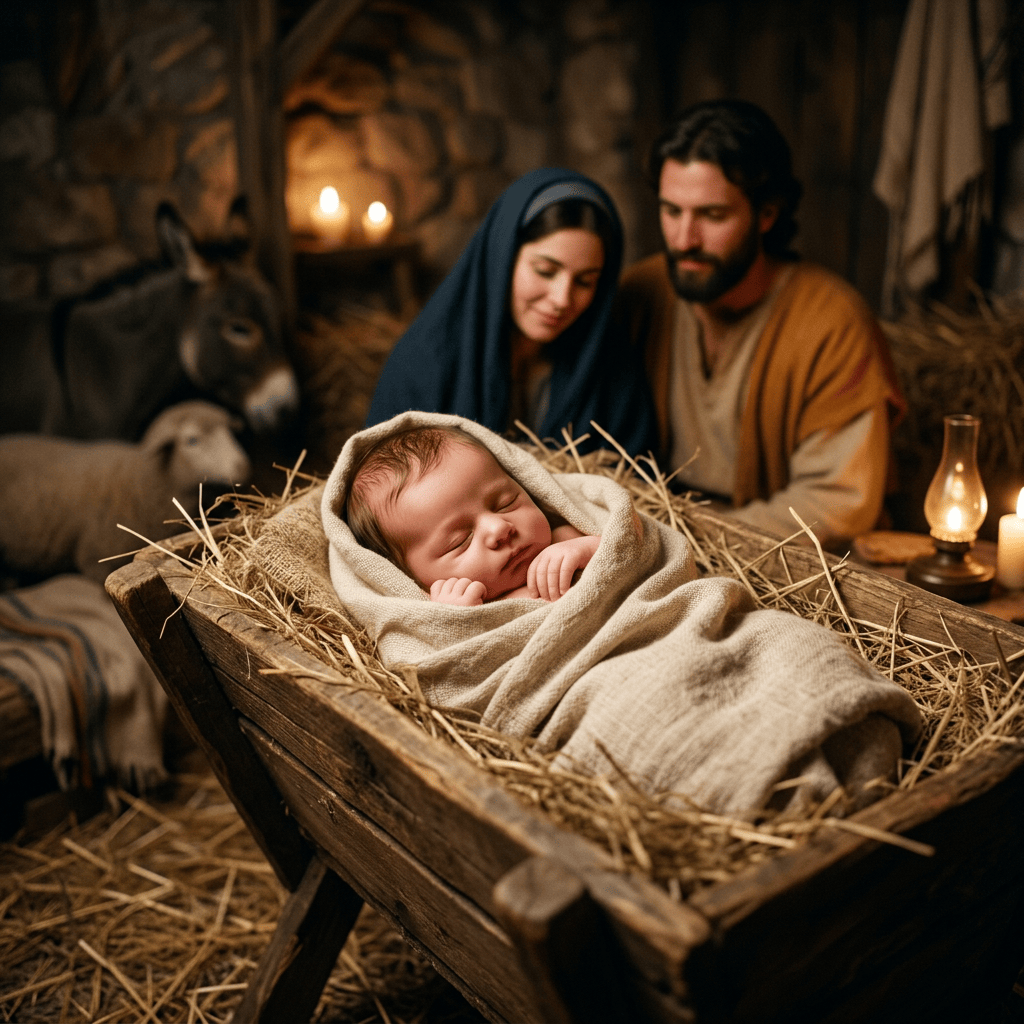
Sleeping newborn in a straw-filled manger with Mary, Joseph, and animals nearby
Angels, Bible, Hebrews, Helping, Humanity, Salvation, Scripture

NOT LIKE THE ANGELS

HEBREWS 2:16

“For clearly He does not give help to angels, but He gives help to the descendants of Abraham.”

Some people just don’t need your help, do they? You could offer all the help in the world, and they would decline it because they don’t see themselves as needing anything. I find that is true especially among the lost. And if they are affluent, they sure don’t think they need any help at all. I hate to bear it to them, but we all need help.

Today’s verse is a little puzzling at first read. Was the writer saying that Jesus didn’t help the angels but instead helped mankind? That is part of it, for sure, but that is not all of it. One scholar says, “the meaning is, that He did not seize the nature of angels, or take it to Himself with reference to rendering ‘them’ aid, but He assumed the nature of man – in order to aid ‘him.’ He undertook the work of human redemption, and consequently it was necessary for Him to be man.” (Barnes’ Notes on the Bible)

ASK QUESTIONS (Command to Obey, Promise to claim, Sin to avoid, Application to make, Something new about God)

Let’s call this verse Something new about God. God could have sent Jesus to earth in His heavenly form, and millions would have immediately fallen at His feet in fear. He could have appeared with the heavenly host in Bethlehem announcing God’s wrath upon all men unless they bowed to Him. But instead of taking that form, He chose the form of man. He came as a baby.

Philippians 2:5-8 spells this out very clearly, “5 Have this attitude in yourselves which was also in Christ Jesus, 6 who, as He already existed in the form of God, did not consider equality with God something to be grasped, 7 but emptied Himself by taking the form of a bond-servant and being born in the likeness of men. 8 And being found in appearance as a man, He humbled Himself by becoming obedient to the point of death: death on a cross.”

Aren’t you glad He chose to come like us? He not only appeared in human form, but He also came as a helpless baby born in a manger. God could have sent Him into Herod’s palace, but He chose to place His seed in a young virgin Jewish girl betrothed to a carpenter. God followed the lineage proclaimed throughout Scripture and not a Hollywood script that would have made a “bigger” story. Never underestimate the lowliness of our Savior. It was a chosen position for a specific purpose – so He could relate to everyone.

Lord, Your plans are always perfect and for that I praise You.

Standard
Ship captain using binoculars on a vessel bridge overlooking rough seas
Bible, Captain, Hebrews, Originator, Salvation, Scripture

CAPTAIN OF SALVATION

HEBREWS 2:10

“For it was fitting for Him, for whom are all things, and through whom are all things, in bringing many sons to glory, to perfect the originator of their salvation through sufferings.”

Many years ago, I worked for Florida Baptist Children’s Homes and had a coworker who was quite the jokester. He called me Commodore. He even photoshopped my official agency picture with me wearing a boat captain’s hat. I still have that picture lying around somewhere. The only boat I captained was a three person rowboat, lol.

You may ask, “Where do you see the word “captain” in our verse today?” The Greek word translated “originator” is arxēgós “from arxḗ, ‘the first’ and ágō, ‘to lead’ – properly, the first in a long procession; a file-leader who pioneers the way for many others to follow. Arxēgós does not strictly mean ‘author,’ but rather “a person who is originator or founder of a movement and continues as the leader – i.e. ‘pioneer leader, founding leader’” (HELPS Word-studies) The word can be defined as captain or prince.

ASK QUESTIONS (Command to Obey, Promise to claim, Sin to avoid, Application to make, Something new about God)

Do you see the Something new about God here? I have never seen Jesus as Captain, even though the full definition of the Greek word definitely describes Him. This word is only used three other times in the New Testament. It is used by Peter in his second sermon found in Acts 3:15 where it says, “but put to death the Prince of life, whom God raised from the dead, a fact to which we are witnesses.” Later in Acts, we find it used again by Peter in 5:31. Right after Peter tells the high priest they have to obey God rather than men (verse 29), he says, “He is the one whom God exalted to His right hand as a Prince and a Savior, to grant repentance to Israel, and forgiveness of sins.” Don’t you know those words really got under their skin?

The last time we see the word arxēgós used is later in Hebrews 12:2. “looking only at Jesus, the originator and perfecter of the faith, who for the joy set before Him endured the cross, despising the shame, and has sat down at the right hand of the throne of God.” Jesus began the Christian faith. He was the originator, the captain, the author. He set the example for us all to follow.

Can I point out one more thing in our verse today? It’s something that you might miss. We are told that God perfected Jesus through sufferings. Look at the last phrase again. It says, “to perfect the originator of their salvation through sufferings.” Jesus was already perfect, wasn’t He? Why did God have to use sufferings to perfect Him? MacLaren says it well. “Christ’s perfecting is not the perfecting of His moral character, but the completion of His equipment for His work of being the Captain of our salvation.” God completed His work through Christ through His sufferings. What a gift to us!

Father God, I give You praise for establishing Jesus as the Captain of our salvation.

Standard
Firefighter assists a man beside a burning car as emergency crews respond
Bible, Escape, Hebrews, Rescue, Salvation, Scripture

NO ESCAPE

HEBREWS 2:3

“how will we escape if we neglect so great a salvation? After it was at first spoken through the Lord, it was confirmed to us by those who heard,”

We have all seen the videos of people being rescued from floods or fires. I saw one recently where a woman was trapped in a burning car after an accident. She was freed from the wreckage just in time by a police officer and some regular citizens who jumped in to help. She had one way to escape that burning vehicle. She had to rely on those doing the rescuing. She could not do it herself.

We are posed a question in today’s verse that you have probably heard preached. It is pretty simple. How can we expect to escape the consequences of sin unless we accept that great salvation? The word “escape” occurs eight times in the New Testament. The Topical Lexicon says it, “communicates a decisive, often miraculous deliverance from danger or judgment.” We only have one way of escape – Jesus.

ASK QUESTIONS (Command to Obey, Promise to claim, Sin to avoid, Application to make, Something new about God)

This passage today shows us a Sin to avoid. What is that sin? Spurning the Gospel, denying the offer of salvation. That is the only unforgiveable sin. If we deny that, we have no hope. The word “neglect” in our verse literally means “pay no attention to.” You can’t do that and expect to make it to heaven. Just as the woman in that burning car couldn’t expect to survive if she refused the help of her rescuers, we cannot expect to escape judgment unless we yield to our Rescuer.

I also see an Application to make here. We have an obligation once we have received this great salvation to spread it far and wide. We need to look for those trapped in the burning fires of sin and offer them the way of escape. I love 1 Corinthians 10:13 which reads, “No temptation has overtaken you except something common to mankind; and God is faithful, so He will not allow you to be tempted beyond what you are able, but with the temptation will provide the way of escape also, so that you will be able to endure it.” Notice it says, “the way of escape.” The definite article is there in the Greek. There is only one way of escape, not many as the world declares.

The beautiful thing about this “great salvation” is that it is free for the asking. We simply have to believe and receive as John 1:12 says. That does not mean we just name it and claim. No! Believing and receiving requires us to follow and obey. If you are thankful for your “great salvation,” live like it and invite others to join you.

Father God, I am so thankful for the free gift of salvation that was offered to me and for Your Spirit’s wooing of me.

Standard
Group gathered beneath a HEIRS OF SALVATION arch at sunset
Bible, Scripture, Promises, Salvation, Inheritance, Heirs, Hebrews

HEIRS OF SALVATION

HEBREWS 1:14

“Are they not all ministering spirits, sent out to provide service for the sake of those who will inherit salvation?”

To be named an heir is a promise given by the one who possesses the item(s) to be inherited. My dad named me and my three siblings heirs to his estate when he passed. I have named heirs to my estate when I pass on to glory. Sometimes heirs not only inherit possessions, but they may also inherit debts. Whatever the inheritance, it does not pass from the owner to the heir until the owner dies. That’s just how it works down here on earth.

For the first thirteen verses on Hebrews 1, we have been looking at the character and promises attributed to Jesus, the Messiah. We’ve seen several Old Testament references used by the writer of Hebrews to point to that. Now, here in the last verse of the chapter, he points to the purpose of Jesus – our salvation. Don’t you love that he calls us heirs of salvation. Look at this quote I found in a source. “The salvation is both the state of salvation here, and its full fruition hereafter. When we are ‘justified by God’s grace’ we are ‘made heirs according to the hope of eternal life (Titus 3:7)” (Cambridge Bible for Schools and Colleges)

ASK QUESTIONS (Command to Obey, Promise to claim, Sin to avoid, Application to make, Something new about God)

In our verse today, we see a clear Promise to claim, don’t we? Jesus would not name us heirs of salvation unless He is promising to see that through. At His death He purchased our salvation. His sacrifice on the cross paid the penalty for our sin for which God the Father received and redeemed all mankind. That redemption is dependent on our accepting Jesus’ sacrifice on our behalf. Then and only then do we become heirs of salvation. Hallelujah!

There’s Something new about God also. The Lord tells us in the first part of this verse that He has commissioned His angels to be “sent out to provide service” for us who believe. I truly believe the Lord has His angels watching over us and interceding on our behalf against the evil one. In Psalm 91:11 it says, “For He will give His angels orders concerning you, to protect you in all your ways.” Jesus even referred to children having “their angels” in Matthew 18:10. “‘See that you do not look down on one of these little ones; for I say to you that their angels in heaven continually see the face of My Father who is in heaven.’”

We are promised salvation and told the angels will help us along the way. What more could you ask for? We all face trials and hard times, don’t we? But the end for we followers of Christ should never be something we are fearful of or afraid to face. We are heirs of salvation and therefore heirs of the kingdom. If we are God’s heirs, we are part of the royal priesthood (1 Peter 2:9). Live like royalty today. Walk in victory!

The promise of my inheritance of salvation is enough, O Lord.

Standard
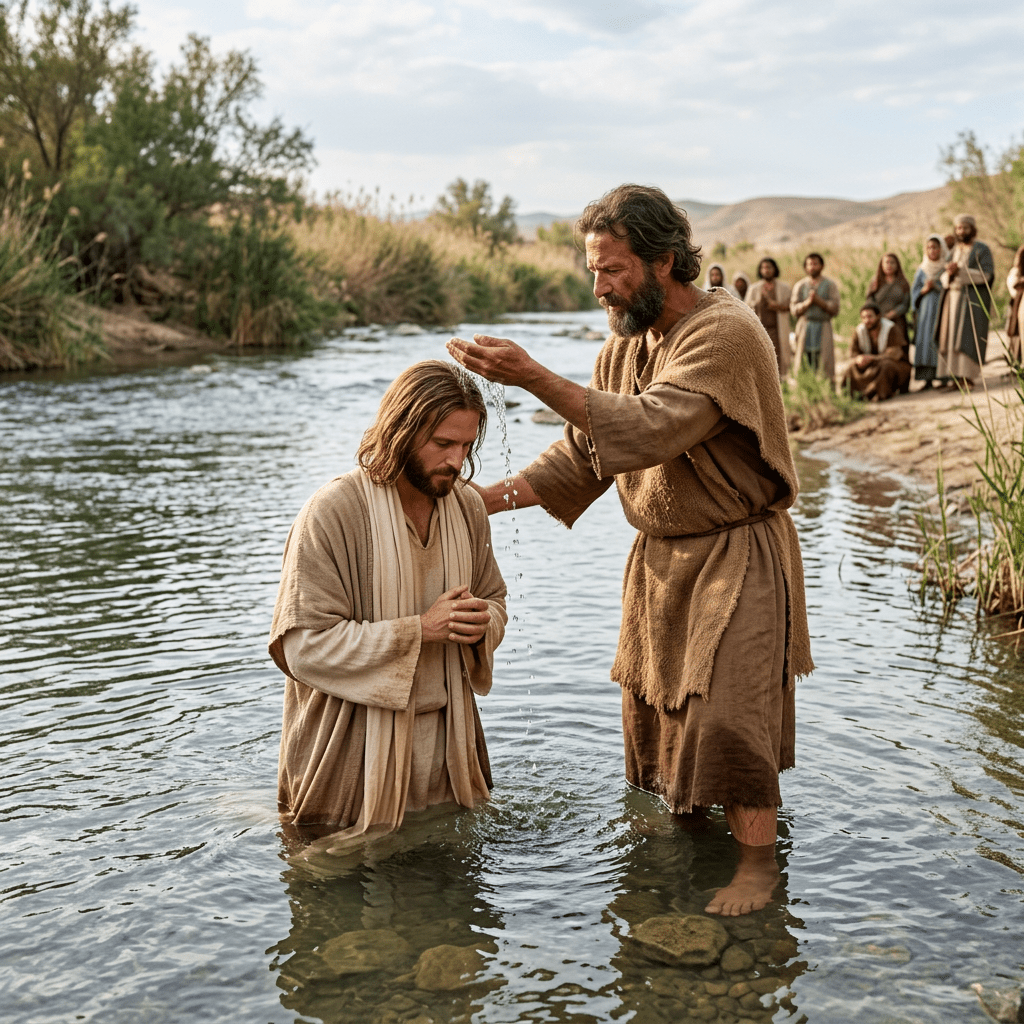
A robed man baptizes another person in a river before onlookers.
Beloved, Bible, Love, Ministry, Romans, Salvation, Scripture

MY BELOVED

ROMANS 16:5b

“Greet Epaenetus, my beloved, who is the first convert to Christ from Asia.”

Do you have anyone who calls you “beloved”? That’s not a term we use a lot in the U.S., but when it is used it draws your attention. I have an acquaintance who has regularly used that term when she was talking to her followers. Because I know this person, I know that her “term of endearment” was genuine. She really loves those who follow her ministry and read her books.

Why did Paul call Epaenetus “beloved”? This is the only time in the entire New Testament when his name is referred to. He is only described as Paul’s first convert in Asia. He obviously lives in Rome at the time of the writing of this letter. I wonder if he was still there and was able to see Paul when he arrived. Wouldn’t that have been a grand reunion? They had certainly kept in touch since Paul knew he was in Rome. But why is he “beloved”?

APPLICATION

The word “beloved” is the Greek word agapétos which comes from agape. We all know that as God’s kind of love, right. K. Wuest describes it as “divinely-loved-ones.” That is a good description. A beloved person may not be the easiest person in the world to love, but they are someone you love because of the love of Christ that is in you and them. That makes them beloved.

So, why was Epaenetus so loved by Paul? The Topical Lexicon may lend some reasons. It says, “1. God often begins great movements through one receptive heart. 2. Early believers carry a stewardship to model faithfulness for those who follow. 3. Personal affection and recognition within the body, as Paul shows toward Epaenetus, nurture perseverance and unity.” Epaenetus’ conversion may have started the movement in Asia. We don’t that for sure, but we can speculate he had influence there.

Who calls you beloved? You can count on one person – the Lord Jesus Christ. Even He was called “beloved” by His Father. In Matthew 3:17 we see these words, “and behold, a voice from the heavens said, ‘This is My beloved Son, with whom I am well pleased.’” God looks down on you right now from heaven and declares you beloved. Never forget that. Now, see who you can call beloved on His behalf.

Thank You, Lord, for calling me as one of Your beloved saints.

If the Lord should lead you to support our ministry, check out our ministry page at Trans World Radio (www.twr.org/carl-willis). 

Standard
Elderly woman distributing food packets to a smiling man indoors with other people in the background
Bible, Calling, Gospel, Romans, Salvation, Scripture, Testimony, Witnessing

BECAUSE OF YOU

ROMANS 11:31

“so these also now have been disobedient, that because of the mercy shown to you they also may now be shown mercy.”

Occasionally in life we may receive a blessing because someone else has been blessed. For instance, what if someone close to you receives a huge financial blessing only to turn around and bless you with part of that blessing. You only received that because they had received something. Because they were so grateful for what they had received, they wanted to be a blessing to others. I have been the recipient of such gifts in the past and have done the same myself.

In today’s verse, Paul continues to show the connection between the Gentile believers and the Jewish nation. I just love this verse. Don’t you? Look at how Barnes describes this. “Through the mercy, that is, the compassion or deep feeling of the converted Gentiles; through the deep and tender pity which they would feel for the blinded and degraded Jews: the gospel should be again carried to them, and they should be recalled to the long lost favor of God. Each party should thus cause salvation to come to the other – the Jews to the Gentiles by their unbelief; but the Gentiles, in their turn, to the Jews by their belief.”

APPLICATION

While today’s verse is specifically talking about Gentiles ministering to Jews, this verse applies to every believer’s responsibility to share the good news to unbelievers. Our blessing of salvation should be shared, not hoarded. We are commanded in Matthew 28:18-20 to go and make disciples of all nations. That command is still in force, isn’t it? There are still so many Unreached People Groups (UPGs) out there. And the days are hastening to a close.

Keith Parks, the former President of the Southern Baptist Convention International Mission Board, once said that if God has not specifically called you to stay home, He has called you to go. His point was and the point still is that we should know our calling. Every believer has a calling which involves being a witness. Whether that is to the waiter and waitress who serves your meal or to an unreached tribe in the Amazon rainforest.

Don’t hoard your blessing. Pour out the knowledge and joy of your salvation. As you do, you will find your cup overflows. God will continue to fill you with joy unspeakable. Does He promise every person will receive it? No! Paul experienced that. Many of the Jews who heard him share about Jesus were not swayed to believe. But he remained faithful to tell the story. Keep sharing!

Lord, thank You for the greatest blessing. Help me share it with others so they too may be blessed.

If the Lord should lead you to support our ministry, check out our ministry page at Trans World Radio (www.twr.org/carl-willis). 

Standard
Empty rural road with 'No Return' sign on the side
Bible, Covenant, Irrevocable, Romans, Salvation, Scripture

IRREVOCABLE

ROMANS 11:29

“for the gifts and the calling of God are irrevocable.”

When I hear the word “irrevocable” I think about a legal contract. Those come in all forms and have different components. One kind is an irrevocable trust which is defined as “a legal arrangement where the grantor permanently transfers ownership of assets to a trust, managed by a trustee for beneficiaries, which cannot be easily changed or terminated.” This is meant to be a permanent arrangement.

Paul uses the Greek word ametamelétos here and one other time in 2 Corinthians 7:10. It is not used anywhere else in the New Testament. The word comes “from a (as a negative particle) and a presumed derivative of metamellomai (change of heart or mind); irrevocable — without repentance, not to be repented of.” Another source I looked at said, “The adjective conveys an unalterable state—an action, decision, or outcome that will never be rescinded or lamented. In Scripture it serves to highlight either the unwavering character of God’s purposes or the settled peace that accompanies genuine repentance.”

APPLICATION

The use of it in 2 Corinthians 7:10 really applies to us. Just look at what Paul writes here. “For the sorrow that is according to the will of God produces a repentance without regret, leading to salvation, but the sorrow of the world produces death.” Our repentance for salvation is a one-time event that cannot be revoked. Isn’t that amazing? Just as His covenant with Israel is irrevocable, so is His covenant with us. Hallelujah!

God is not some fickle god who changes his mind whenever he wants. God knows exactly what He is doing and why He is doing it. He doesn’t have to rethink His decisions or actions. Everything He does is irrevocable because He is just and holy. Because He is those things, we can trust Him to never abandon us or cast us aside.

You may have entered into some agreements which you thought were irrevocable. Take marriage, for instance. What God designed to last a lifetime often ends in divorce. No agreement that is manmade is irrevocable. Only God’s agreements are. Have you entered in that agreement with Him? He promises to always be with you and protect you. He will see you through those hard times He allows to make you more like His Son. Trust His irrevocability!

I am eternally thankful that my covenant with You is binding forever.

If the Lord should lead you to support our ministry, check out our ministry page at Trans World Radio (www.twr.org/carl-willis). 

Standard
Group of people raising hands toward radiant divine hands in the sky at sunset
Beloved, Bible, Enemies, Forgiveness, Gospel, Promises, Romans, Salvation, Scripture

ENEMIES AND BELOVED?

ROMANS 11:28

“In relation to the gospel they are enemies on your account, but in relation to God’s choice they are beloved on account of the fathers;”

How is it possible to love your enemy? It isn’t possible on our own. But you have read where Jesus tells us to do just that. In Matthew 5:43-45, we read His instructions He gave the people during the Sermon on the Mount. “43 ‘You have heard that it was said, “YOU SHALL LOVE YOUR NEIGHBOR and hate your enemy.” 44 But I say to you, love your enemies and pray for those who persecute you, 45 so that you may prove yourselves to be sons of your Father who is in heaven; for He causes His sun to rise on the evil and the good, and sends rain on the righteous and the unrighteous.’”

Paul had undoubtedly heard these words spoken by Jesus, either through word of mouth or perhaps he was present in the crowd listening in (this is pure conjecture on my part). But He also knew of God’s election of the Jewish nation and how much God loved them. Let’s take a look a look at the two words used to describe them in today’s verse – “enemies” and “beloved.”

APPLICATION

The word used by Paul here which is translated “enemies” is exthrós, which HELPS Word-studies describes as “someone openly hostile (at enmity), animated by deep-seated hatred. Exthros implies irreconcilable hostility, proceeding out of a ‘personal’ hatred bent on inflicting harm (DNTT).” This word is used to describe Satan and his demonic army of fallen angels who are bent on our destruction. That’s a pretty strong word to describe the unbelieving Jews. But this was referring to their actions toward the believing Gentiles. Paul knew this all too well. Remember he was on the way to Damascus to arrest and even perhaps kill followers of Christ when he met Jesus face to face.

The other word Paul uses is “beloved.” That’s the Greek word agapétos which is used to describe God’s relationship with the Jewish nation. No matter what they did, God still loved them. The Topical Lexicon says it this way. “Divine affection is not merely sentimental; it describes the covenantal bond established by the blood of Christ.” Christ’s blood was shed for the Jewish nation, even though many of them rejected it. God was still in covenant with them and sought to redeem them.

We have a choice today. We can be enemies of the cross or God’s beloved. Which do you prefer? One holds certain judgment and damnation while the other promises eternal security and living in the presence of the Lord. One invites struggles and hardship while the other gives us the power to face life’s uncertainties knowing the One Who can calm any storm. 1 John 4:7 tells us, “Beloved, let’s love one another; for love is from God, and everyone who loves has been born of God and knows God.

Father, I am grateful that I am one of Your beloveds. You love me with an everlasting love. 

If the Lord should lead you to support our ministry, check out our ministry page at Trans World Radio (www.twr.org/carl-willis). 

Standard
Grafted olive tree branch tied with twine in an orchard
Bible, Grafted, Promises, Redemption, Return, Romans, Salvation, Scripture

THE RETURN

ROMANS 11:24

“For if you were cut off from what is by nature a wild olive tree, and contrary to nature were grafted into a cultivated olive tree, how much more will these who are the natural branches be grafted into their own olive tree?”

I can’t help but think about the story of the prodigal son when I read today’s verse in Romans. You know the story. The younger son of a man demanded his inheritance so he could go away and basically squander it. He rejected his father and his family and clung to worldly things. How did that end for him? In a pigpen wanting to eat what they were eating. So, the Word says, “he came to himself” and decided to return home. He was welcomed with open arms and a feast.

Paul tells us in verse 24 above that those Jews who have rejected Jesus will be welcomed back into the “olive tree” of God if they return. They will be welcomed back with open arms. They will be grafted back into “their own olive tree.” There’s room for all. Isn’t that amazing? God is waiting to welcome all who have turned away. He does not hold grudges.

APPLICATION

What’s all this talk about an olive tree? The Topical Lexicon gives us a picture of this symbolism. “Paul draws on this well-known imagery to explain God’s redemptive program (Romans 11:17–24). Israel is the cultivated olive whose nourishing root is the patriarchal covenant promise; believing Gentiles are the wild shoot graciously grafted in.” It goes on to say, “The illustration safeguards two truths: (1) the continuing faithfulness of God to ethnic Israel—“’how much more will these, the natural branches, be grafted into their own olive tree’ (verse 24); and (2) the unity of Jew and Gentile in one redeemed people, sharing one root and one life. The horticultural image repudiates replacement theology while urging humility, perseverance and hope.”

I know that was a long quote, but I felt it gave a clear picture of the imagery Paul was using in talking about the Jews and Gentiles. Isn’t it great that Gentile believers are now knit together with believing Jews into the same root and tree. The root of Jesse is Jesus. We are joined for eternity because of Jesus.

Do you know someone who has turned their back on God and walked away? It is never too late for them to return. Let me rephrase that. As long as someone still has breath and the Lord has not called His church home, there is time for them to return. God will welcome them home, just like He does the Jew who finds Jesus. As followers of Christ, it is our calling to bring as many as we can with us to our eternal home. Tell His story and let Jesus do the calling.

Oh Lord, thank You for grafting me into Your tree and for “regrafting” any Jew who returns to You.

If the Lord should lead you to support our ministry, check out our ministry page at Trans World Radio (www.twr.org/carl-willis). 

Standard
Older woman smiling and man with a serious expression standing indoors
Bible, Gentiles, Israel, Kindness, Production, Pruning, Romans, Salvation, Scripture

KINDNESS AND SEVERITY

ROMANS 11:22

“See then the kindness and severity of God: to those who fell, severity, but to you, God’s kindness, if you continue in His kindness; for otherwise you too will be cut off.”

When I hear the word “kindness,” certain people’s faces come to mind. Some people just have that gift or should I say choose to exercise it well. And when I think of the word “severity,” other faces pop up. Those I don’t like so much. They are not much fun to be around.

Paul is still in the midst of describing the relationship of unbelieving Jews as compared to the believing Gentiles. One was pruned away to make room for the other. The words Paul uses in today’s verse, “kindness” and “severity” further paint the picture for us. Let’s look at what Paul was referring to by using these two words.

APPLICATION

First, Paul uses the Greek word xrēstótēs which HELPS Word-studies describes this way, “(useful kindness) refers to meeting real needs, in God’s way, in His timing (fashion).” It is listed in Galatians 5:22 as a fruit of the Spirit. So, we know this must come from God, right? Paul uses it three times in this verse alone. He must have wanted to drive a point home. Keep in mind that the idea of a kind god was foreign to Gentiles. Even most of the Jews tended to believe more in a harsh God rather than a kind one.

But how about that other word, “severity”? Surely, that isn’t from God. Actually, the Greek word isn’t as severe as it sounds. I need to share Barnes’ description of this word. “The word ‘severity’ now suggests sometimes the idea of harshness, or even of cruelty. (Webster.) But nothing of this kind is conveyed in the original word here. It properly denotes ‘cutting off,’ apotomian from apotemnō, to cut off; and is commonly applied to the act of the gardener or vine-dresser in trimming trees or vines, and cutting off the decayed or useless branches. Here it refers to the act of God in cutting off or rejecting the Jews as useless branches; and conveys no idea of injustice, cruelty, or harshness.”

If you just looked at the process of pruning, it does look severe. It looks like you’re cutting off all the good stuff. But this act gives room for new growth. In this instance, it was for the engrafting of the Gentiles into the root plant. Paul is making sure the Gentiles know their place and how they got there. He also wants them to know it is just as important to stay in that relationship. The same applies to us, brothers and sisters. Enjoy the kindness of God, but do not confuse kindness with meekness. God will hold us all accountable for our actions should we choose to ignore Him.

Father, thank You for Your kindness toward me and for the pruning You do to make me more productive.

If the Lord should lead you to support our ministry, check out our ministry page at Trans World Radio (www.twr.org/carl-willis). 

Standard